Over the years I've used a couple of different approaches to stains. Sometimes I camouflage them so they disappear into the design. Other times I do just the opposite and make the stains part of the design.
Making the stains part of the story
I used the second approach on a vintage tablecloth that had stains I couldn't remove.
Instead of trying to hide them, I outlined the stains with embroidery thread and a running backstitch.
For a bit of humor, I added what might have caused them: coffee, tea, gravy.


One of the things I love about upcycling is that you know exactly how the fabric will behave because it's already been cleaned so many times. You also know that the stains are probably there to stay.
I decided to upcycle the garments using the Paganoonoo upcycle sewing tutorial for the Patti blouse because I wanted to show off the embroidered linen in the back panel and cuffs.


What you don't see are the stains on the linen garment: grease spots and slight bleaching in some parts. They are camouflaged as features.
Once again, I used a running backstitch around the stains. The shapes are organic, and I really like them as a "feature."
I deliberately used a color on the opposite side of the color wheel from the green. The result is that the orange distracts to the degree that the eye doesn't even register the stain.

I also used fabric pens to add dots, making it look more like a patterned fabric.
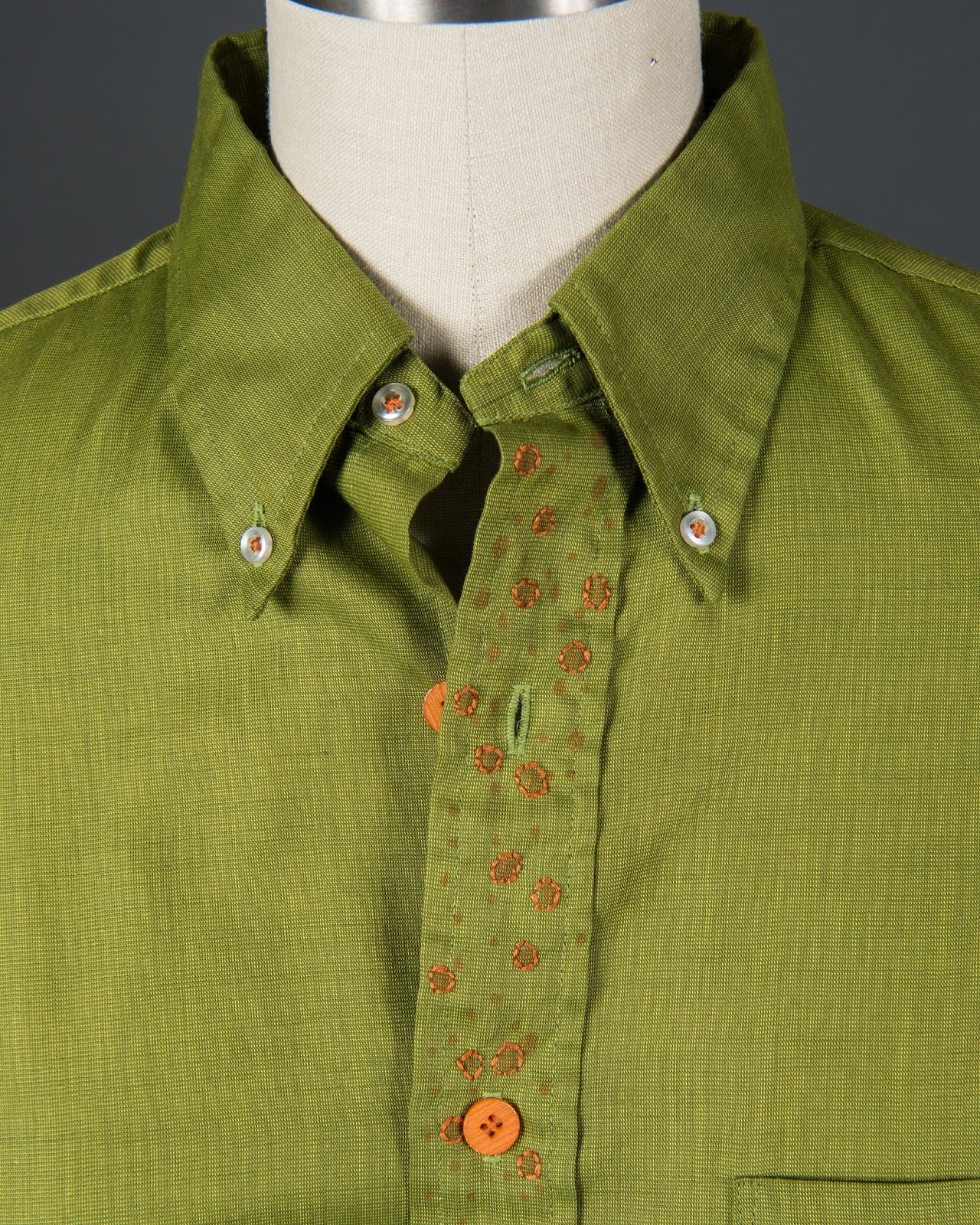
I also placed orange buttons on the front placket and used the fabric pen and embroidery thread there, even though it wasn't stained.

I ended up with a much more interesting garment than it would have been without the stains as features.

Love the shape of this blouse?
Make your own!
Our Patti upcycle sewing tutorial shows you how to add hip room to a standard men's dress shirt. No pattern needed.

What will you do with your stains to turn them into features, humorous or not?
Happy upcycling,
Michelle Paganini


